Bathrooms That Handle Daily Moisture Without Failing
Bathroom Remodeling in Madison for fixtures that leak, tile grout that crumbles, and layouts that lack adequate storage
Outdated bathrooms often show visible signs of neglect and wear, such as unsightly water stains accumulating around the edges of tubs due to caulk that has started to pull away. Additionally, cracks in grout lines can permit moisture to seep into wall cavities, causing further damage over time. The problem is exacerbated by vanities that are inadequately sized for the varied toiletries and essentials that two people typically use, leading to clutter and disorganization. R3 Rock Remodeling & Reconstruction LLC offers comprehensive bathroom remodeling services throughout Madison, specifically designed to address these common issues and transform your space into a functional and attractive area. Our approach includes full vanity replacement to ensure ample storage, upgraded flooring that not only enhances aesthetics but is also durable enough to withstand standing water, tile installation that incorporates proper waterproofing layers, and fixture upgrades that significantly improve both functionality and long-term durability. To maintain high-quality standards, the owner personally oversees each project, ensuring that all installations meet rigorous benchmarks aimed at preventing any callback issues.
The remodeling process initiates with the meticulous removal of existing tile, stripping everything down to the wall studs to thoroughly assess the condition of the framing. Any sections of framing that have suffered water damage are promptly replaced to maintain structural integrity. Before we install the new tile, we also ensure that comprehensive waterproof membranes are put in place to prevent future issues. When it comes to selecting new vanities, we focus on practical features such as drawer depth tailored for hair tools and thoughtfully designed storage compartments that help keep countertops organized and clear of clutter. Additionally, we take great care in selecting flooring materials, ensuring that they provide slip resistance when wet for enhanced safety. We also examine layout improvements that can reposition toilets for better flow, relocate shower valves to more intuitive heights for ease of use, and add ventilation fans that are accurately sized to meet the room's cubic footage requirements.
If you're ready to revamp your bathroom space, we invite you to request a bathroom remodeling estimate. This will give you an opportunity to evaluate fixture placement, explore innovative storage solutions, and review a variety of material options that are well-suited to accommodate your household's unique usage patterns. Let's create the bathroom of your dreams together!
How Bathroom Remodeling Addresses Water Damage
Demolition is a crucial phase that reveals whether previous installations included waterproofing membranes behind the shower tile or if moisture has already penetrated the walls and reached the studs, potentially causing significant rot. Once the walls are opened up, any compromised framing is carefully assessed and replaced as necessary, and waterproof barriers are applied in multiple layers to ensure maximum protection—starting with a pan liner at the base of the shower, followed by a sheet membrane that extends up the walls to the height of the showerhead. Afterward, tile installation commences, with thinset mortar meticulously applied in consistent ridges to create a strong bond, and once the tiles are set, grout joints are meticulously sealed after curing to block any potential water penetration at the seams.
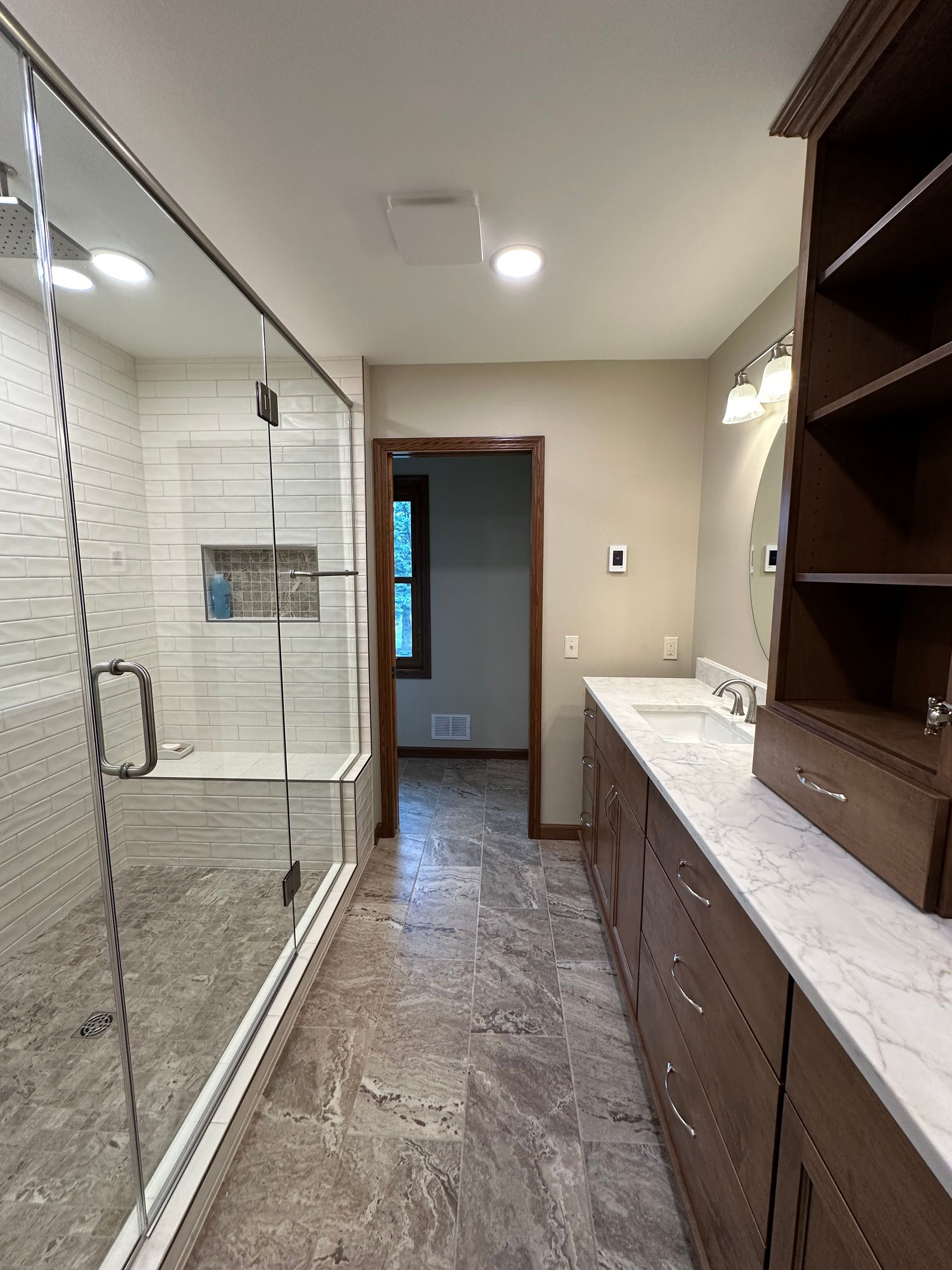
Upon completion of this meticulous process, you will find grout lines that remain beautifully uniform without any unsightly gaps, and caulk joints at the edges of the tub that remain tightly sealed, accommodating for any thermal expansion that might occur over time. Additionally, vanity drawers will glide effortlessly and gracefully because they are mounted level on reinforced wall studs, allowing for a seamless user experience. The flooring will sit flush with the thresholds leading into hallways, effectively eliminating the trip hazards that can often arise when installers neglect to account for variations in subfloor heights. Furthermore, mirrors will fog less quickly due to the design choice of properly ducted ventilation fans that lead to the exterior, rather than venting into the often problematic attic spaces.
This comprehensive remodeling effort encompasses a range of tasks, including the installation of fixtures, intricate tile work, careful mounting of the vanity, and attention to finish details; however, it does not extend to structural changes that would necessitate the relocation of plumbing stacks or alterations to exterior walls. Our in-house crews are dedicated to maintaining consistent installation practices throughout all phases of the project—demolition, rough-in, and finishing—thereby significantly reducing the risk of miscommunication that often occurs when subcontractors hand off their work from one stage to another. Such an integrated approach ensures the highest quality and efficiency in delivering a finished bathroom that meets your expectations and stands the test of time.
Step-by-step remodeling process
Our bathroom remodeling services transform outdated layouts into stylish, functional spaces. We provide complete redesigns with plumbing repositioning, wall adjustments, custom vanities, architectural lighting, and smart storage. Our craftsmen ensure precision tile work, heated flooring, and efficient fixture upgrades. We also focus on retrofitting older Wisconsin homes to update plumbing, subfloors, and plaster walls.
- Phase 1: Initial Consultation & Spatial Planning — Evaluating existing layout challenges, moisture control needs, structural constraints, and functional goals for your household.
- Phase 2: Comprehensive Material & Fixture Selection — Curating custom cabinetry, tile selections, countertop materials, plumbing fixtures, and lighting layouts.
- Phase 3: Precision Demolition & Substructure Prep — Stripping the space down to the studs, inspecting underlying framing for hidden moisture damage, replacing compromised wood, and leveling subfloors.
- Phase 4: Mechanical Rough-In & Multi-Layer Waterproofing — Updating plumbing, electrical, and ventilation systems, followed by complete waterproof membrane installation behind all wet zones.
- Phase 5: Tile Work, Fixture Mounting & Finish Carpentry — Executing precision tile setting, custom vanity installation, glass door fitting, trim work, and final quality checks.
Common Questions About This Service
Property owners in Madison frequently ask about waterproofing methods, ventilation requirements, and how bathroom remodeling projects accommodate daily routines during construction.
What waterproofing steps prevent future tile damage?
Installations include a waterproof membrane applied directly to wall studs before tile backer board goes up, with seams overlapped and sealed, followed by a second barrier coat on the backer board itself before thinset mortar is spread.
How are vanities sized to improve storage?
Vanity width and drawer depth are selected based on the number of people using the bathroom and the specific items you store, with deeper drawers positioned lower for bulky items like hair dryers and shallower compartments at eye level for daily toiletries.
Why does grout sometimes crack after installation?
Grout cracks when tile is installed over flexible substrates that move slightly under foot traffic, or when grout joints are too narrow for the tile size, which creates stress points that fracture as the house settles.
What happens if plumbing issues appear during demolition?
Once walls are opened, any corroded pipes, improperly sloped drain lines, or outdated supply valves are identified and replaced before tile installation begins, preventing leaks that would otherwise require tearing out new materials to access hidden plumbing.
How does remodeling improve ventilation efficiency?
Ventilation fans are upgraded to models rated for the bathroom's square footage and ducted directly to exterior vents rather than terminating in attic spaces, which removes moisture before it condenses on mirrors or causes paint to peel.
R3 Rock Remodeling & Reconstruction LLC specializes in comprehensive bathroom remodeling projects, utilizing dedicated and consistent crews who expertly manage all aspects of the renovation process. From intricate tile work to the precise installation of fixtures and detailed finish carpentry, our team ensures that each task is handled by the same skilled professionals, eliminating the complications and delays that often come from handing off responsibilities between different trades. In addition, we engage in thoughtful discussions about custom bathroom upgrades that cater specifically to your needs, particularly addressing common issues such as excess moisture or inadequate storage space in your current layout, ultimately creating a functional and aesthetically pleasing environment that suits your lifestyle perfectly.
Serving Southern Wisconsin Communities
Based in Milton, WI, R3 Rock Remodeling & Reconstruction LLC delivers master bathroom transformations and comprehensive bathroom remodeling across Southern Wisconsin. We proudly serve homeowners in Janesville, Milton, Madison, Beloit, Lake Geneva, Monroe, and Oconomowoc.